
- All
- Product Name
- Product Keyword
- Product Model
- Product Summary
- Product Description
- Multi Field Search
Views: 0 Author: Site Editor Publish Time: 2026-10-16 Origin: Site


Municipal gravity sewers handle constant stress from shifting soils, heavy traffic loads, and aggressive wastewater chemistry. Traditional rigid pipes struggle under these conditions, often leading to joint displacement, groundwater infiltration, and eventual structural failure. Site engineers and utility managers need a reliable, low-maintenance system capable of managing high-capacity wastewater collection without the constant risk of collapse. Krah Pipes provide a direct solution to these field challenges. Built with advanced spiral profiling technology, these flexible thermoplastic systems deliver the load-bearing strength of heavy rigid pipes while eliminating vulnerabilities to differential settlement and sulfuric acid degradation. We will break down the engineering mechanics, installation requirements, and material performance of these systems for both new municipal builds and trenchless rehabilitation projects.
Structured Durability: How spiral profile geometry optimizes stiffness-to-weight ratios for deep-trench gravity flow.
Hybrid Performance: Managing gravity flow with the secondary capability to withstand low-pressure surcharge conditions.
Material Longevity: The role of HDPE and PP-HM spiral wound gravity pipes in preventing chemical degradation and root intrusion.
Joint Integrity: Why electro-fusion welding outperforms gasketed connections in seismic-prone or shifting soil areas.
Lifecycle Economics: Shifting from initial procurement cost-focus to long-term asset management.
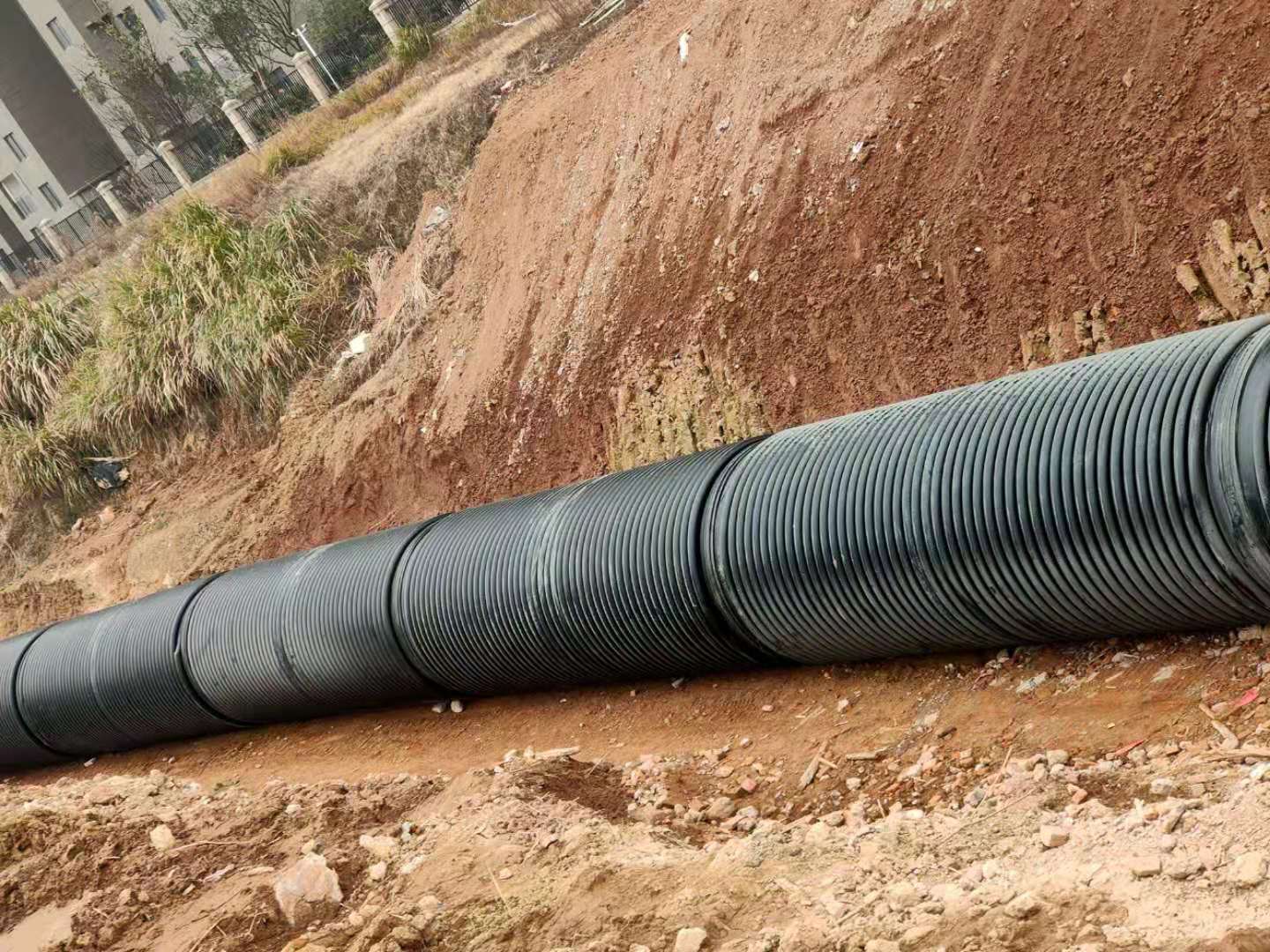
The manufacturing process dictates the structural capabilities of these piping systems. Production relies on a continuous hot-winding extrusion process over a heated steel mandrel. This method creates a seamless, homogenous pipe wall without weak points. The extruder applies a solid inner waterway layer followed immediately by a profiled outer layer. This specific geometry maximizes the moment of inertia. It places polymer material exactly where it is needed to resist external soil pressure and dynamic traffic loads. The resulting structural wall profile delivers an exceptionally high stiffness-to-weight ratio. Municipalities get a pipe that remains lightweight for transport yet strong enough for deep trench burial. Engineers customize the profile design based on specific project load calculations, preventing over-engineering and optimizing material usage.
Selecting the correct thermoplastic polymer determines long-term network performance. High-Density Polyethylene (HDPE) and Polypropylene High-Modulus (PP-HM) dominate the municipal sector. Both materials offer complete immunity to galvanic corrosion and biological attack. HDPE provides excellent flexibility and impact resistance. It performs exceptionally well in cold weather installations and shifting soils where brittle materials would crack. Conversely, PP-HM spiral wound gravity pipes offer a higher flexural modulus. This higher modulus allows manufacturers to achieve higher ring stiffness with less overall material thickness. PP-HM also exhibits superior performance at elevated effluent temperatures. Municipal engineers specify PP-HM for industrial discharge zones where wastewater temperatures regularly exceed standard domestic levels.
Ring stiffness determines how a pipe resists radial deflection under external load. The industry measures this as Nominal Stiffness (SN), expressed in kilonewtons per square meter (kN/m²). Standard classifications range from SN2 up to SN16. The selected SN rating directly impacts trench design and backfill requirements. Higher stiffness ratings permit shallower cover depths under heavy traffic loads. They also tolerate deeper burial depths in landfill or deep-trench sewer applications. A proper stiffness classification ensures the pipe maintains its circular cross-section over decades of service. Excessive deflection restricts flow capacity and compromises joint integrity. Engineers calculate the required SN value based on native soil modulus, seasonal groundwater levels, and expected live loads.
Municipal gravity sewers occasionally experience unexpected hydraulic surcharges. Heavy rainfall events or downstream blockages flood the network rapidly. Traditional bell-and-spigot concrete pipes leak heavily under these conditions. Their elastomeric gaskets blow out under minimal internal pressure. Spiral profiled thermoplastic pipes operate differently. They function primarily as gravity conduits but possess a secondary pressure capability. A properly welded system easily accommodates intermittent low-pressure surcharges up to 3 bar. This hybridization prevents the exfiltration of raw sewage into the surrounding groundwater during severe storm events. It provides municipalities with a robust safety margin against environmental contamination and regulatory fines.
Flow capacity dictates the required diameter for any sewer network. Thermoplastic pipes feature a highly smooth internal bore. They achieve a Manning’s roughness coefficient (n) of approximately 0.009. Concrete and clay pipes typically range from 0.013 to 0.015. This superior hydraulic efficiency offers two distinct engineering advantages. First, it allows designers to specify flatter trench slopes while maintaining self-cleansing velocities. Flatter slopes reduce excavation depths, minimize shoring requirements, and save significant earthmoving costs. Second, it often permits the use of a smaller nominal diameter to carry the exact same volume of wastewater. Utilizing large diameter Krah pipes maximizes network throughput without requiring massive trench footprints.
Gravity sewers must withstand dynamic surface loads and static groundwater pressure simultaneously. Live loads from heavy vehicles transfer stress directly through the soil envelope. Flexible thermoplastic pipes shed this load into the surrounding backfill. This soil-structure interaction creates a resilient arching effect. The pipe deflects slightly, transferring the vertical load into compressive stress within the side-fill soil. High groundwater tables present a different challenge: buoyancy. Empty or partially full large-diameter pipes float if not properly anchored. Engineers prevent buoyancy by specifying proper granular backfill compaction. In extreme high-water conditions, contractors pour concrete anti-flotation collars over the pipe crown. These collars provide the necessary dead weight to counteract upward hydrostatic forces.
Municipal wastewater generates a highly aggressive internal environment. Anaerobic bacteria in the sewage produce hydrogen sulfide (H2S) gas. This gas rises to the pipe crown and mixes with condensation. Thiobacillus bacteria then convert the H2S into sulfuric acid. This acid rapidly degrades the cementitious binder in concrete pipes, leading to crown collapse. Polyolefins like HDPE and PP-HM remain completely inert to sulfuric acid. They do not require protective interior coatings, epoxy paints, or liners. They also resist aggressive industrial effluents, including harsh solvents and alkaline cleaning agents. This broad chemical resistance ensures the structural wall remains intact throughout the entire design life of the sewer.
Piping materials fall into two structural categories: rigid and flexible. Concrete and vitrified clay are rigid. They support earth loads through the strength of the pipe wall alone. When soil settles unevenly, rigid pipes experience severe shear stress. This stress causes transverse cracking, spalling, and joint separation. Thermoplastic systems are flexible. They deflect slightly under load, transferring the stress into the surrounding soil envelope. This flexibility allows the pipeline to conform to differential ground settlement without structural failure. It makes flexible systems ideal for seismically active regions, reclaimed land with poor soil bearing capacity, or areas prone to frost heave.
The weakest point of any sewer network is the joint. Traditional rigid pipes rely on push-fit elastomeric gaskets. Over decades, these rubber gaskets degrade, shrink, or roll out of position during installation. This failure allows groundwater infiltration, which overloads wastewater treatment plants. It also permits sewage exfiltration, contaminating local aquifers. Thermoplastic spiral pipes utilize integrated electro-fusion welding. Resistance wires embedded in the socket melt the polymer surfaces together. The pipe and spigot fuse into a single, continuous monolithic structure. This welded joint is stronger than the pipe wall itself. It guarantees a 100% leak-free network, eliminating root intrusion and infiltration entirely.
Heavy materials require massive logistical support. A standard 2.5-meter diameter concrete pipe segment weighs several tons. Transporting these segments requires specialized heavy-haul trailers. Unloading and placing them demands massive crawler cranes. This heavy machinery disrupts urban traffic, damages existing roadways, and increases site hazard levels. Thermoplastic pipes weigh up to 90% less than their concrete equivalents. Contractors transport multiple large-diameter segments on a standard flatbed truck. Site crews maneuver and position the pipes using standard excavators. This lightweight nature drastically accelerates installation speed and reduces heavy equipment rental costs.
Performance Metric | Spiral Profiled Thermoplastic | Reinforced Concrete | Vitrified Clay |
|---|---|---|---|
Joint Integrity | Electro-fusion (Monolithic, Leak-free) | Gasketed (Prone to degradation) | Gasketed (Prone to shear failure) |
Chemical Resistance | Excellent (Immune to H2S) | Poor (Requires protective liners) | Excellent |
Hydraulic Roughness (Manning's n) | 0.009 | 0.013 - 0.015 | 0.011 - 0.013 |
Settlement Tolerance | High (Flexible load transfer) | Low (Rigid, prone to cracking) | Low (Brittle) |
Installation Weight | Lightweight | Extremely Heavy | Heavy |
A common misconception is that flexible pipes require less rigorous backfill. The opposite is true. The structural integrity of a flexible pipe relies entirely on the soil envelope. Contractors must use imported granular material, such as crushed stone or engineered gravel, for the bedding and haunching zones. Native cohesive soils are generally unacceptable for the immediate pipe embedment. Proper installation requires strict adherence to backfill protocols.
Excavate the trench to provide a minimum clearance of 300mm on each side of the pipe for proper compaction equipment access.
Lay a minimum 150mm foundation of compacted granular bedding material to support the pipe invert.
Place the pipe and carefully compact the haunching zone to prevent voids under the lower half of the pipe.
Place the primary initial backfill in balanced 300mm lifts on both sides of the pipe simultaneously.
Compact each lift to a minimum of 95% Standard Proctor Density using vibratory plate compactors.
Urban environments often prohibit open-cut trenching due to traffic disruption and utility conflicts. Trenchless rehabilitation offers a non-disruptive alternative. Slip-lining is a primary trenchless method for renewing legacy sewers. Contractors push or pull a new flexible conduit directly into the degraded host pipe. HDPE spiral profiled pipe excels in this application. Its smooth exterior profile slides easily through the existing concrete or brick sewer. Once the new pipe is in place, crews pump cellular grout into the annular space. This grout locks the new pipe in position and stabilizes the decaying host structure. The municipality gains a brand-new, corrosion-resistant sewer without excavating the street.
Sewer networks operate as complex grids. New installations must integrate with existing infrastructure. Connecting spiral profiled pipes to concrete manholes requires specific transition techniques. Contractors use mechanical puddle flanges or hydrophilic swelling rings cast directly into the manhole wall. These seals prevent groundwater from tracking along the outside of the pipe into the manhole. For lateral connections, crews utilize saddle fittings. They weld these saddles directly onto the main pipe wall using electro-fusion. This method creates a watertight branch connection for residential or commercial sewer tie-ins. It eliminates the need for bulky, leak-prone mechanical banded couplings.
Strict site acceptance testing ensures the installation meets engineering standards. The two primary QA protocols are deflection testing and joint pressure testing. Contractors perform a mandrel test 30 days after final backfill. They pull a rigid, sized cylinder through the pipeline. The mandrel diameter typically equals 95% of the pipe's base internal diameter. If the mandrel passes freely, the pipe has not exceeded the 5% allowable deflection limit. For joint integrity, crews utilize the integrated test port on the electro-fusion socket. They apply pneumatic pressure between the dual weld zones. A sustained pressure reading confirms a flawless, leak-free weld before the trench is closed.
Municipal public works departments spend significant budgets maintaining sewer flow. Fats, oils, and grease (FOG) build up on rough pipe walls, causing blockages. The ultra-smooth internal surface of thermoplastic pipes resists FOG adhesion. It also prevents the accumulation of scale and biological slime. When maintenance is required, the smooth bore simplifies cleaning. Crews use high-pressure water jetting to clear debris. The robust inner wall easily withstands standard municipal jetting pressures up to 150 bar without surface scoring or delamination. This reduced maintenance frequency frees up municipal resources for other infrastructure tasks.
Infrastructure investments demand long-term reliability. Engineers design municipal gravity sewers for a minimum 50-year operational life. Thermoplastic spiral pipes routinely exceed this benchmark. Polymer creep rupture curves indicate a design life approaching 100 years under standard gravity sewer conditions. This longevity depends heavily on correct material specification and strict adherence to fusion guidelines. Unlike concrete, which begins degrading the moment H2S is introduced, polyethylene and polypropylene maintain their structural properties indefinitely in wastewater environments. They do not rust, rot, or spall. This predictable performance allows municipalities to accurately forecast long-term asset management budgets.
Modern infrastructure projects must account for environmental impact. The carbon footprint of a pipeline includes manufacturing, transportation, and installation. Thermoplastic pipes require less energy to manufacture than reinforced concrete. Their lightweight nature drastically reduces fuel consumption during transport. A single truck carries significantly more linear meters of plastic pipe than concrete. Furthermore, HDPE and PP-HM are 100% recyclable. At the end of their century-long service life, the material can be excavated, ground down, and repurposed into non-pressure agricultural or drainage products. This closed-loop lifecycle aligns with global municipal sustainability mandates.
Not every project requires advanced spiral profiled systems. Engineers must identify project archetypes where these pipes offer the highest return on investment. Specify these systems in deep burial applications where high ring stiffness is mandatory. Use them in coastal areas with high groundwater tables where joint infiltration is a severe risk. They are essential in industrial zones discharging aggressive, high-temperature effluents. Finally, they are the optimal choice for trenchless rehabilitation zones under busy urban arterials. In these scenarios, the long-term operational savings far outweigh any initial material cost premiums.
A well-structured RFP ensures the municipality receives a high-quality engineered system. Vague specifications invite substandard substitute materials. RFPs must explicitly state the required Nominal Stiffness (SN) based on ISO 9969 standards. They must mandate that the pipes be manufactured via a continuous hot-winding process. The specification should require integrated electro-fusion joints for all pipe-to-pipe connections. Do not allow elastomeric push-fit gaskets as an alternative for the mainline. Furthermore, the RFP must demand comprehensive manufacturer engineering support, including customized profile design calculations and buoyancy analysis.
Selecting the right manufacturing partner is as critical as selecting the pipe material. Specifiers must evaluate vendor capabilities rigorously. Request factory certifications, including ISO 9001 for quality management and ISO 14001 for environmental standards. Verify that the vendor supplies the necessary electro-fusion welding equipment and control boxes calibrated for their specific pipe sizes. Demand proof of DVS (German Welding Society) certification or equivalent training for their field technicians. A qualified vendor provides on-site welding supervision and QA testing assistance during the initial phases of installation.
Upgrading municipal gravity sewers requires balancing immediate project constraints with long-term asset management goals. Traditional rigid pipes offer familiarity but suffer from joint failure and chemical corrosion. Flexible spiral profiled systems require strict backfill protocols but deliver unparalleled longevity and leak-free performance. The monolithic nature of electro-fusion joints eliminates groundwater infiltration. The chemical immunity of polyolefins eradicates H2S degradation. By shifting the focus from initial procurement costs to long-term operational stability, municipalities build networks that survive for generations.
Run a hydraulic model on your existing network to identify flow bottlenecks and determine the exact pipe diameters required.
Execute geotechnical soil borings along the proposed trench alignment to establish native soil modulus and groundwater elevations.
Calculate the specific Nominal Stiffness (SN) rating needed based on your maximum burial depth and anticipated surface traffic loads.
Write technical specifications that explicitly mandate continuous hot-wound manufacturing and integrated electro-fusion joints.
Demand contractors submit a detailed backfill compaction plan and a trenchless slip-lining methodology prior to site mobilization.
Relying on outdated rigid materials for dynamic urban environments is an engineering risk. Large-diameter thermoplastic systems represent a critical shift toward predictable, low-maintenance infrastructure. They provide the structural resilience necessary to support modern cities while protecting the surrounding environment from wastewater contamination. Municipalities that adopt these engineered solutions secure a reliable, leak-free sanitary network for the next century.
A: Concrete relies on massive wall thickness for rigid strength, making it brittle and prone to cracking under shifting soil loads. Thermoplastic spiral pipes are flexible and engineered to specific Nominal Stiffness (SN) ratings. They achieve high stiffness through a structured outer profile, allowing them to safely transfer heavy surface loads into the surrounding compacted soil envelope without structural failure.
A: PP-HM (Polypropylene High-Modulus) provides a higher flexural modulus than standard HDPE. This characteristic allows manufacturers to achieve higher ring stiffness using a lighter pipe profile. PP-HM also delivers superior thermal stability. It resists deformation and maintains its structural integrity even when exposed to continuous, high-temperature industrial wastewater discharges.
A: Yes, but site engineers must implement specific anti-buoyancy measures. Because thermoplastic pipes are lightweight, empty conduits float in saturated trenches. You prevent this by specifying highly compacted granular backfill around the pipe. In severe groundwater conditions, contractors pour concrete anti-flotation collars over the pipe crown to provide necessary dead weight.
A: While engineered primarily for gravity flow, properly welded spiral profiled pipes handle intermittent low-pressure surcharges effectively. Depending on the specific wall thickness and profile design, these systems safely withstand internal pressures up to 3 bar. This capability prevents sewage exfiltration during heavy storm events or downstream network blockages.
A: Yes. Their smooth exterior profile and lightweight construction make them highly effective for slip-lining. Contractors push or pull long, fused segments directly into degrading concrete or brick host pipes. Crews then pump cellular grout into the annular space, securing a brand-new structural pipe without requiring disruptive surface excavation.
A: Field crews need a specialized, calibrated electro-fusion control box supplied by the pipe manufacturer. They also require stable power generators to deliver consistent voltage, heavy-duty pipe alignment clamps to prevent movement during the fusion cycle, and approved cleaning agents to prep the polymer surfaces before welding.
A: Thermoplastic pipes feature an extremely low Manning’s n value of approximately 0.009, indicating a highly smooth internal wall. This superior hydraulic efficiency allows engineers to design sewers with flatter trench slopes or specify smaller nominal pipe diameters while still achieving the required flow rates and maintaining self-cleansing velocities.


